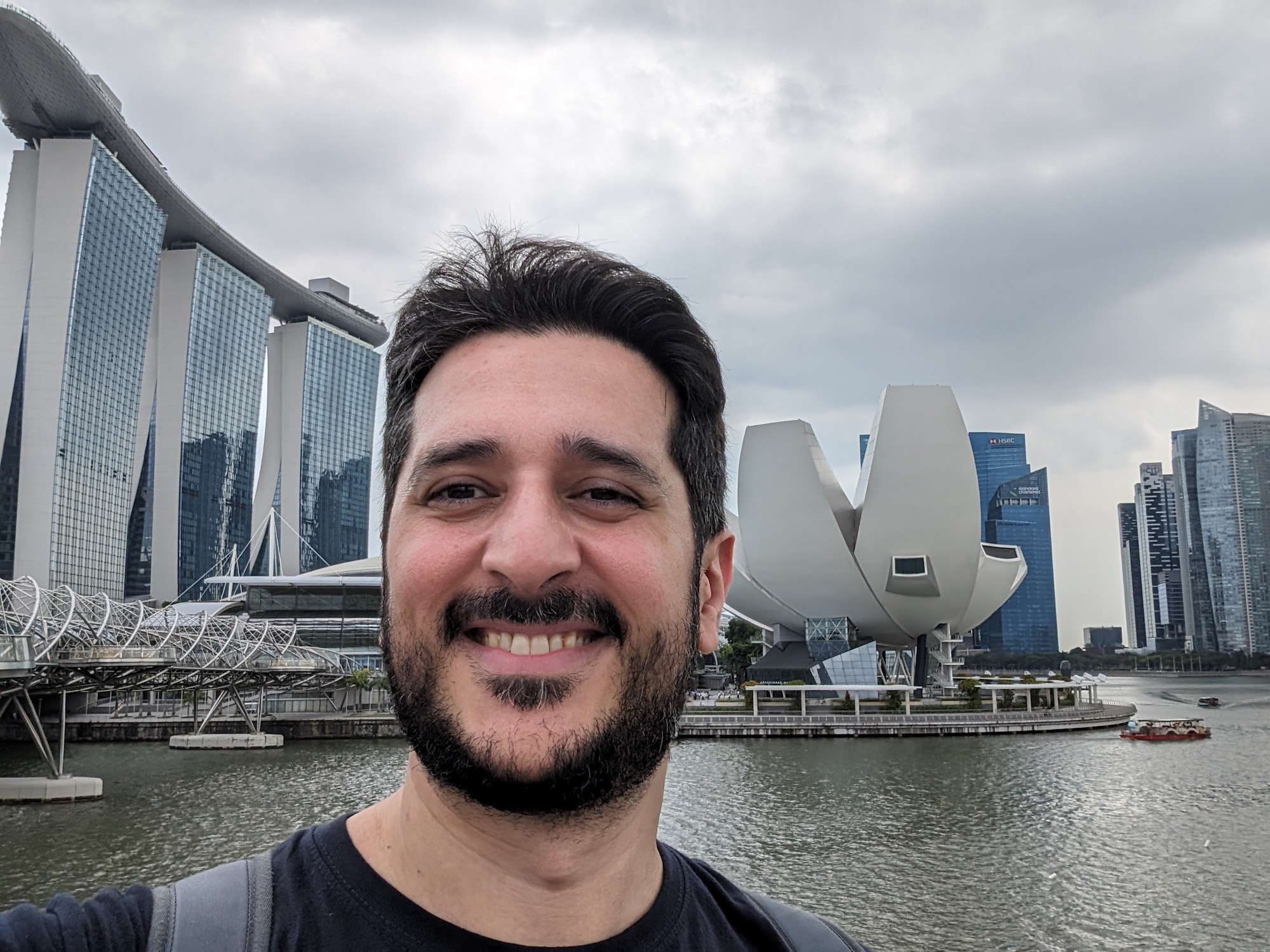
Stefano Le Pera’s route into software engineering began in Rome, not through a traditional computer science degree, but through curiosity, creativity and a love of making things happen on screen. After trying economics and realising it was not the right path, he found himself drawn to digital design, where he became “the more technical person” among a largely artistic crowd. Then came Flash. “I loved it,” he says. “You could write a small bit of code and immediately see something happen.” That instant visual feedback pulled him deeper into development, and before long he was working as a Flash developer in Rome.
What was your journey into software engineering?
I started working in Italy around 2005, mostly as a Flash developer. I was very passionate about it and largely self-taught, reading, watching DVDs, doing small courses and learning by building things.
After a few years, I felt I had reached a ceiling in terms of what I could learn and the kind of structure I wanted around me, so in 2012 I moved to Berlin. I knew no one, and I didn’t speak German, but it felt like the right leap to take. It was challenging, but a real breakthrough for me, because it taught me that I could live and work in another country on my own.
A few months later, I had an opportunity in London, so I moved here in 2013 and joined Gamesys. I stayed there for about eight years. During that time, Flash died, so I transitioned into modern JavaScript, React, Redux and TypeScript. Luckily, I was able to do that internally through a major project. It was a steep curve at first, but it was one of the best ways to learn.
How did you move into engineering management?
After Gamesys, I joined Virgin Red as a senior engineer. It was a very strong engineering team, and I learned a lot there, but that was also the point where I started feeling drawn towards people management.
I realised I was becoming less interested in solving purely technical problems and much more interested in people, communication and how teams work together.
I couldn’t make that move at Virgin because the company was still quite small, so I started looking elsewhere. Eventually, I joined The Times as an engineering manager. That was my first official step into management, and I was lucky because they were willing to take a chance on me even without a formal track record.
I loved it and what I found most valuable was the shift in perspective. As an individual contributor, you mostly see your team and your work. As a manager, you start to understand the bigger picture, why decisions are made, how organisations operate, and how different parts of the business interact.
After attending a few conferences and tech events I fell in love with the tech community ecosystem so in 2019 I joined a Google Developers Group here in London and became a Lead Organiser: since then I organised countless meet ups, events and free training courses to help as many people as possible.
What made you apply to the Guardian?
After a redundancy round at The Times, I took some time off. I realised I had worked for almost 20 years and had never had more than a month between jobs. So I took the opportunity to reset.
During that time, I spent a few weeks in Thailand, on an island called Koh Phangan, doing meditation, yoga, reiki, kirtan and breathwork. It was something I really needed.
When I started applying again, I saw the Guardian role, and was immediately interested. I had enjoyed working in publishing, and I wanted my work to matter. For me, the most important thing is the environment and culture of a company, because we spend so much of our lives at work. But if the industry is also something I value and feel proud of, that’s even better. I knew and respected the Guardian, especially its fearless journalism, like the Snowden reporting.
How did you find the interview process?
The interview process was really smooth. I had been interviewing with a range of companies, and some processes were very intense, sometimes six or seven rounds. So having just two stages at the Guardian was a pleasant surprise.
More importantly, everyone I spoke to was welcoming and easy to talk to. It felt like a genuine conversation rather than something designed to catch you out.
I was always kept up to date and a few days before I left Thailand, I finally got the call saying I had the job. Then, before my first day, I was invited into the office for lunch to meet the team. I was a huge fan of that. Meeting people informally before you start makes such a big difference. It removes some of the pressure and anxiety from day one.
What have your first impressions been?
Really positive. People have been incredibly welcoming and patient. Even coming from the same industry, every company has its own language, projects, teams and ways of working, so it takes time to understand who’s who and what everything means.
What I’ve appreciated is that I haven’t felt unnecessary pressure. There are expectations, of course, but there has been a good balance. I’ve been given things to do, but also space to learn.
I’ve also noticed that many people have been at the Guardian for a long time. That has huge benefits, because there is so much domain knowledge here. People know not only how things work, but why certain decisions were made years ago. That context has been really valuable.
What are you enjoying most so far?
I’ve really been enjoying both the people culture and the engineering culture. Everyone has been open, collaborative and willing to help, and I’ve already seen how strong the engineering capability is across the teams.
I’ve also felt comfortable contributing though I’ve only been here a few weeks. I’ve already started sharing ideas and drafting proposals, and people have been open to listening.
Looking ahead, I’d like to make a meaningful impact, not just through projects but also by helping improve processes and ways of working. If I can contribute to making things a little bit better for the team and the organisation, that would be a great outcome.
Development of digital products is central to the Guardian. You could be building the products that showcase our progressive and independent journalism, crafting the tools that journalists use to write their stories, developing the services that allow those stories to be distributed across the globe, or safeguarding our financial future.
If you’re interested in joining our product and engineering team, please visit the Guardian News & Media careers page.